The Finishing House / Services / Heritage & period property
Heritage & period property.
Listed townhouses, Georgian and Victorian interiors and conservation-area façades — decorated with the methods and materials their fabric requires.
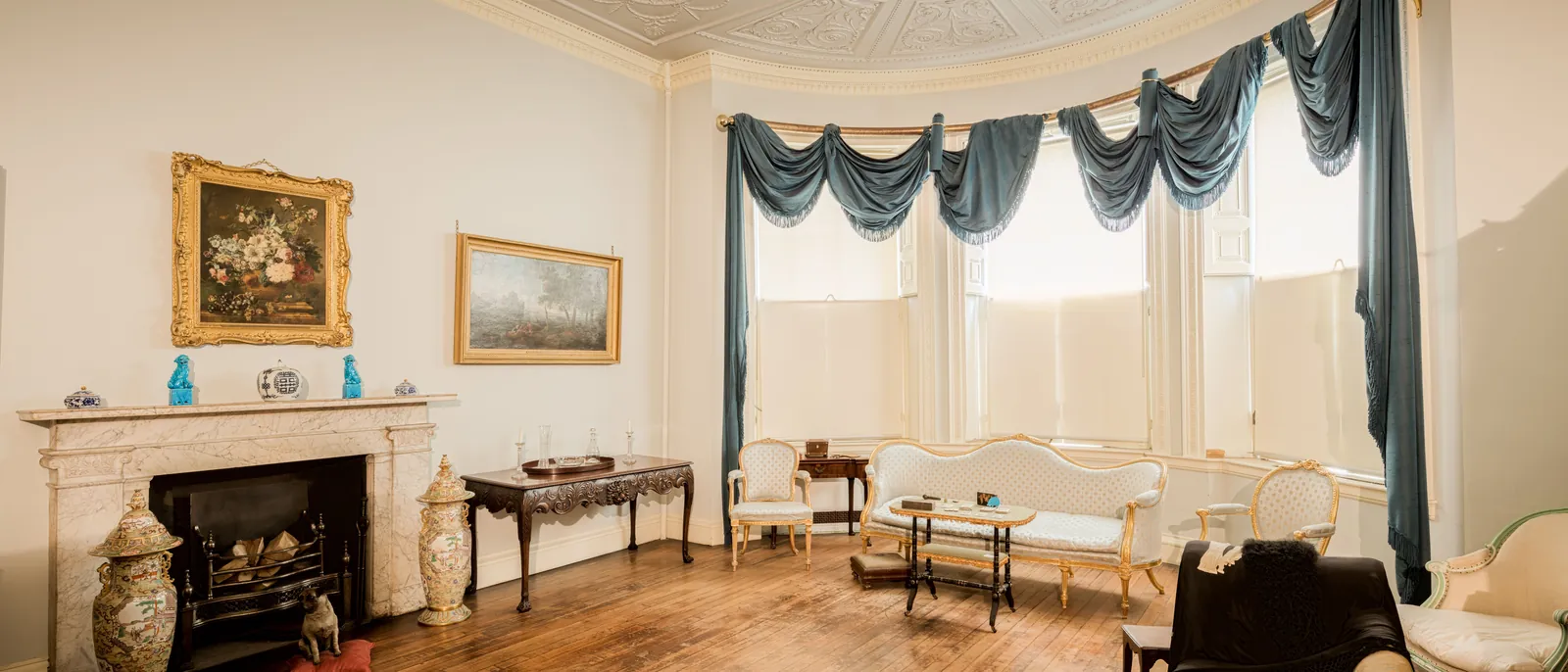
Period and listed buildings are not simply older — they behave differently, and decorating them badly can cause genuine harm. We bring the methods, materials and conservation awareness that prime London's historic homes require, protecting their fabric while finishing them beautifully.
Why period property is different
Historic buildings were built to breathe. Lime plaster, stucco and old timber manage moisture in ways modern materials do not, and sealing them with the wrong coatings can trap damp and accelerate decay. Decorating period fabric correctly begins with understanding how it works — and choosing materials in sympathy with it.
Breathable & traditional materials
Where the fabric requires it we specify breathable mineral and lime-based systems and traditional oil finishes, chosen for vapour permeability and compatibility with historic substrates. The aim is always a finish that looks immaculate and lets the building behave as it was designed to.
Restoring original features
Cornicing, panelling, shutters, staircases and fine joinery are what give period rooms their character. Our method protects and restores them — careful repair and filling, the correct primers for aged timber and plaster, and hand-finished work that sits comfortably in a historic room rather than looking freshly industrial.
Sash window redecoration
The box sash is the working part of a period façade, and the part most often painted shut. Redecorating one properly begins before any paint: both sashes eased and the cords and pulleys checked; the build-up taken off meeting rails, parting beads and staff beads so the window runs; timber cut back to sound material, any decay treated, and bare wood primed with the primer it needs; failed putty renewed and allowed to skin before it is painted. Then three coats, laid off by hand and taken a millimetre or two onto the glass so the seal keeps water out of the putty line, with the window kept moving between coats. Done this way a sash goes for years between repaints; painted shut and over-coated, it decays quietly at the sill. Sashes are sequenced into the same programme as the rest of the elevation — see exterior & façade decorating.
Listed & conservation-area work
Much of our work is within conservation areas and listed buildings, where external decoration is formally constrained. We work with full awareness of consents and requirements, and keep finishes faithful to the building's period and the character of its street — correct in process as well as result.
Listed buildings & conservation areas, in practice
Listing protects the building inside and out; a conservation area protects the character of the street. The two ask different things of a decorator. In a listed house, redecorating like for like is generally straightforward, but stripping historic paint layers, altering original joinery or changing a historic finish can need listed building consent — and we say so before it is specified, not after it is done. In a conservation area the controls are external: repainting a painted façade in its existing colour is normally fine, while a new colour on a front elevation or painting unpainted brick may fall under an Article 4 direction. Westminster and the Royal Borough of Kensington and Chelsea publish their directions and are helpful when asked early; our notes on decorating in a conservation area cover the detail.
On the fabric itself the rule is breathability and reversibility: mineral paints and limewash on lime plaster and stucco, traditional finishes on original joinery, and nothing that seals a wall built to breathe. The terraces of Belgravia and Pimlico, the squares of Chelsea and the estate streets of Marylebone all sit inside conservation areas, and most of our work does too.
Where a period specification calls for traditional or breathable systems, we use them; elsewhere we favour premium water-based, low-VOC paints — low odour, faster to recoat, and kinder to occupied homes.
In motion
Where period detail lives.
The hallways, staircases and joinery of London's period homes ask for patience and the right hand — a short film of the kind of interiors we look after.
Common questions
Asked often.
Do you work on listed buildings?
Yes — a great deal of our work is in listed and conservation-area properties, and we work correctly within the consent process where it applies.
Which systems do you use on historic fabric?
Breathable, compatible ones — mineral and lime-based coatings where old plaster and stucco must breathe, traditional finishes where woodwork deserves them.
Can original features be conserved rather than repainted?
Often, yes — stabilising and protecting a fine original surface is sometimes the most valuable decision in the programme, recorded in the written specification alongside what will be painted.
How is heritage work priced?
Surveyed first, then a fixed written specification — what will be done, with what, in what order — with workmanship guaranteed for twelve months.
Request a consultation
Considering heritage & period property decorating? Let's talk.
Tell us a little about your project and we'll be in touch within one working day — with honest, no-obligation advice from a senior decorator, not a call centre.
We accept a limited number of commissions each month, so every project receives the senior team it deserves.
Start your enquiry Prefer to talk? 020 3983 2484Our other services